
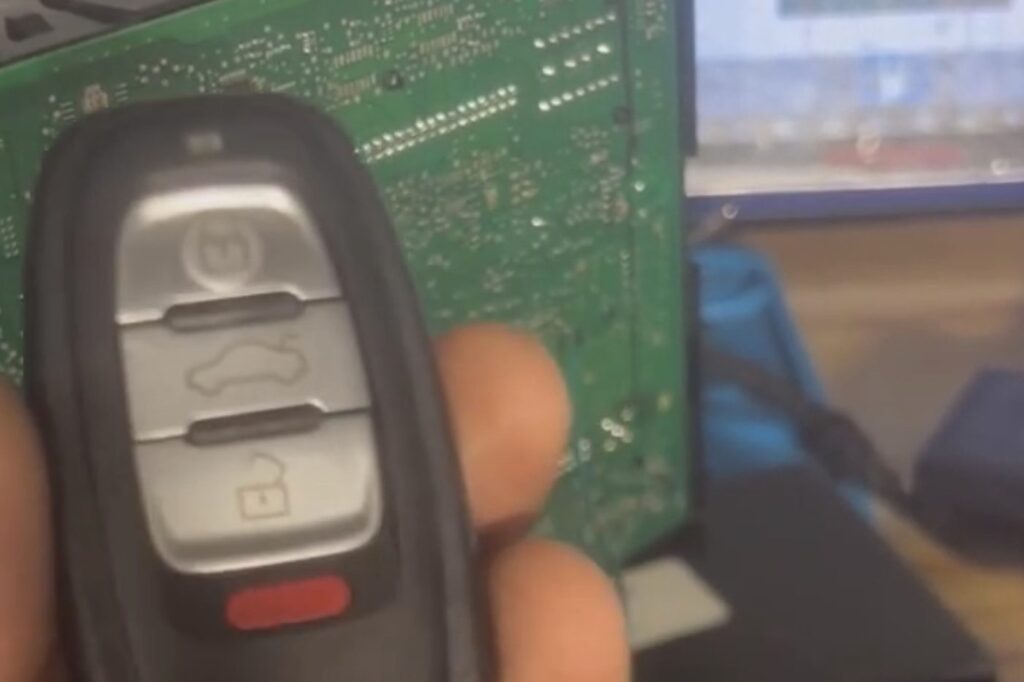
Transponder keys explained: why a copied key may not start your car
You had a key copied. It turns in the ignition.
But the car will not start, or it starts and dies right away.
In many modern cars, that is a transponder key problem, not a cutting problem.
This guide explains what is going on, what you can safely try, and when to call a mobile car locksmith for help.
What is a transponder key
A transponder key is more than a piece of metal.
Inside the plastic head of the key, there is a small chip.
That chip talks to your car’s computer when you try to start the engine.
Basic idea:
- You put the key in and turn it
- A ring around the ignition (or near the push button) sends a signal
- The chip in the key responds with a code
- The car’s computer checks that code
- If the code matches, the car allows fuel and spark and the engine starts
- If it does not match, the engine will not start, or it may start and shut off
So even if the metal blade is cut perfectly, without the right chip data the car thinks the key is wrong.
Signs your key has a transponder (and not just a simple cut key)
You do not need to open the key or guess. Look for these clues:
- Model year: Most cars from the early 2000s onward use transponder keys or key fobs
- Security light: A “key” or “car with a lock” icon on your dash that blinks when the key is on
- Plastic head: A thicker plastic head often means there is a chip inside
- Will unlock but not start: The key works in the door but not in the ignition
- Starts then stalls: Engine fires, then dies within a couple of seconds
If you see a security light that stays on or flashes when you try to start, that is usually an immobilizer / transponder issue.
Why a hardware store copy might not start your car
Many hardware or big-box stores can cut a key that fits your locks.
Some can also copy simple chips. Others cannot.
Common reasons your new copy does not start the car:
-
Chip not present
A plain metal key was cut, but no chip was added or programmed. -
Wrong kind of chip
Your car uses one chip type. The blank used had another. -
Chip not programmed
The blade was cut, but nobody programmed the chip to your car. -
Cloned chip failure
Some systems “clone” one chip to another. On certain cars, this does not work reliably or at all. -
Immobilizer system is picky
Some makes require special equipment and codes. Basic store machines cannot handle them.
The result is the same: the key turns, but the immobilizer blocks the start.
Common symptoms of a transponder problem
If your copied key does not work, pay attention to what the car does. It helps narrow the issue.
-
Key turns but starter does nothing
Often a security lockout or ignition switch issue. -
Engine cranks but never catches
The immobilizer is likely cutting fuel or spark. -
Engine starts then stops in 1–2 seconds
This is a classic immobilizer symptom. -
Security or key light stays on or flashes
The car is not reading or accepting the transponder code. -
Original key works, copy does not
Very strong sign the copy is not programmed correctly.
If none of your keys work, you may have a failed chip reader, damaged ignition, or other electrical issue.
What you should NOT do
When a copied key does not start the car, avoid these mistakes:
-
Do not keep cranking the engine for long periods
You can drain the battery or overheat the starter. -
Do not try to pry open or cut apart the plastic head
You will likely destroy the chip, and the key will never work again. -
Do not try to “glue” a chip from one key into another without proper placement
The chip must sit in the right spot for the reader to see it. -
Do not jam the key or force the ignition
That can turn a chip problem into an ignition repair problem. -
Do not leave the car with the hood up in a risky area
If you must step away, lock the doors and keep valuables out of sight.
If the key is not starting the car after a few calm tries, the problem is not going to fix itself by force.
Simple checks you can do yourself
Before you call anyone, check the basics:
-
Try your original key
- If the original starts the car, your copy is just not programmed or is defective.
- If the original also fails, the problem may be with the car’s immobilizer or ignition, not just the new key.
-
Look at the dashboard
- Turn the key to “ON” but do not start.
- Watch the security or key light.
- If it keeps blinking or stays solid, the car is not happy with the key.
-
Check the battery
- A very weak battery can cause strange behavior.
- Dim lights, slow cranking, or clicking can mean you have two issues at once.
-
Inspect the key
- Is the metal blade badly worn, bent, or cracked
- Is the plastic head broken or loose
-
Try a second working key if you have one
- If one key works and another does not, the problem is likely in that one key.
If the original key works, you can still drive. But you should handle the bad copy before you end up with only one working key.
Why you often need more than just cutting a key
For many modern cars, making a working key has two steps:
-
Cutting the blade
- Match the cuts to your locks so it turns the ignition and doors.
-
Programming the chip or fob
- Sync a unique code in the chip to your car’s computer.
Some cars allow a “DIY” programming process if you already have two working keys. You follow a sequence of key turns and the car learns the new one.
But many systems now need specialized locksmith tools or dealer equipment.
They may require entering security codes, reading modules, or programming over a diagnostic port.
This is why a simple copy sometimes fails, even when it looks perfect.
When to call a mobile car locksmith
Call a local automotive locksmith when:
- A copied key turns but will not start the car
- You lost your only working key and have no spare
- Your key is broken, and you need the chip moved into a new shell
- The transponder chip or key fob is damaged or missing
- You want a spare transponder key or remote made on site
A mobile auto locksmith can:
- Cut and program a new key at your location
- Read key data from your car when all keys are lost
- Diagnose if the problem is the key, the ignition, or the immobilizer
- Help with lost car key replacement when you are stuck without any working key
- Handle key fob programming for remotes and smart keys
At Reading Car Locksmith, technicians come to you anywhere within about an hour’s drive of Reading, PA. You get an estimated arrival time when you call.
What affects the cost of a transponder key service
Every situation is different, so pricing is always by quote.
Instead of numbers, here are the main factors that change the cost:
-
Make, model, and year of the vehicle
Some cars are simple to program. Others use high-security systems. -
Type of key
Plain chip key, flip key, remote head key, or full smart key / proximity fob. -
Number of keys you need
One key vs. making multiple spares at the same visit. -
Whether you still have a working key
All keys lost usually takes more time and tools than adding a spare. -
Condition and location of the vehicle
Access issues or damaged locks/ignition can add work. -
Time and day
Service during normal hours vs. late evening may affect availability.
The technician will usually need your vehicle details before quoting.
FAQ
Can I start my car by taping my old chip to the steering column?
Some people tape the head of a working transponder key near the ignition and use plain metal copies to start the car. It can work, but it defeats the security system and leaves your vehicle easier to steal. It can also cause reading issues if the chip is not in the right place. It is safer to have proper keys cut and programmed.
Will disconnecting the battery reset the immobilizer so my copied key works?
Most of the time, no. The immobilizer memory is not cleared by removing the battery. In some cases, you may even trigger extra security steps. If the chip code is wrong or missing, a battery reset will not fix it. Proper key programming is the real solution.
Can I program a transponder key myself?
On some older models, yes, if you already have two working keys and follow the steps in the owner’s manual. On many newer vehicles, you need special diagnostic tools, security codes, and experience. If you only have one or zero working keys, calling a car locksmith is usually the quickest and safest option.
If your copied car key will not start your vehicle anywhere around Reading, PA, you do not have to guess. A mobile automotive locksmith can come to you, test your key, and cut and program a working transponder key on site. To get help, call Reading Car Locksmith at (484) 247-1988.